


Part 1: How to Plan a Composite Retaining Wall Project
OVERVIEW
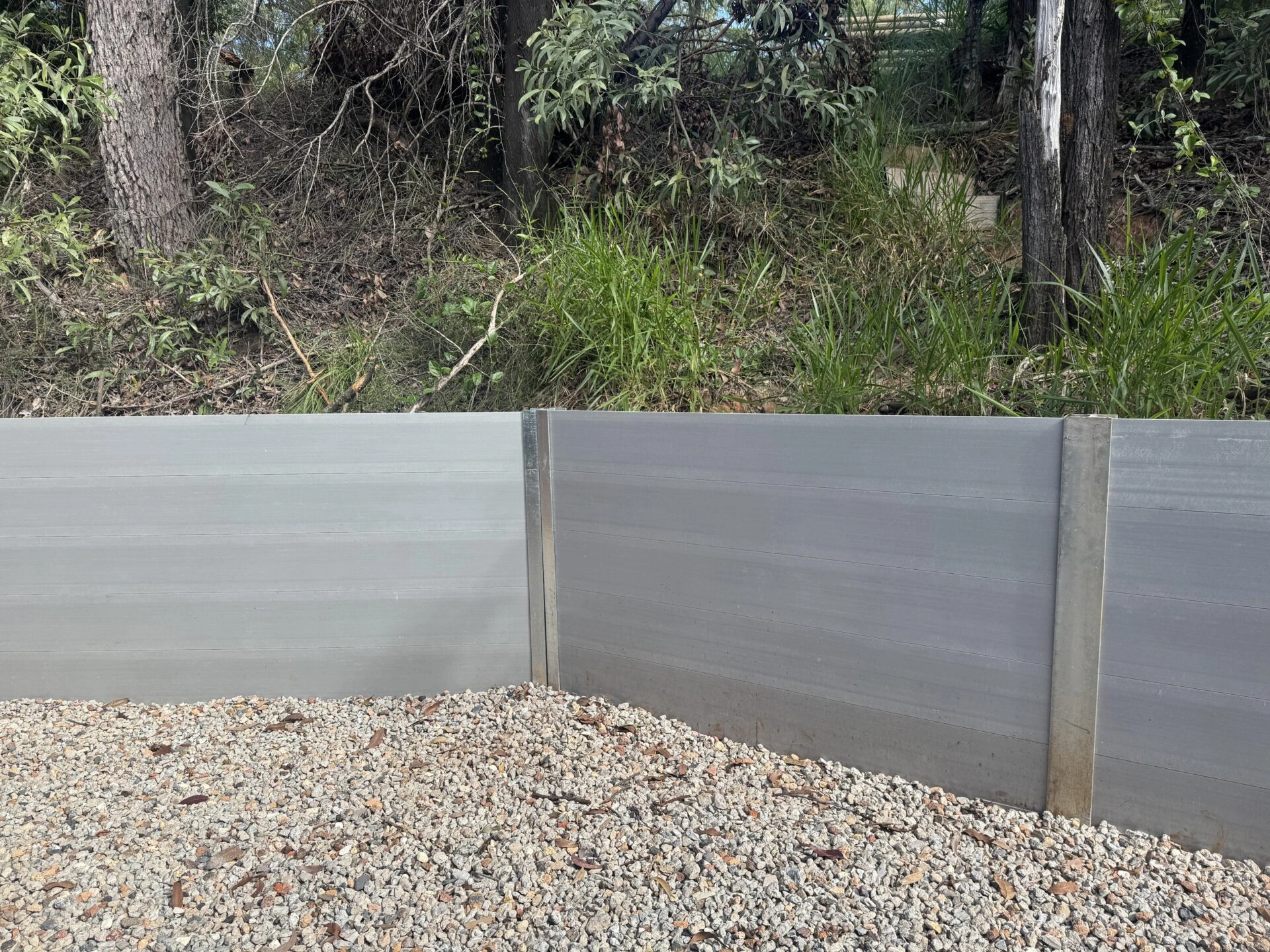
Ready to tackle your dream retaining wall? First, you’ll need to plan the build from start to finish. The key to any successful project is a good plan. In this step, we’ll cover:
- Choosing length, height & location
- Selecting the right materials
- Mapping the location & clearing land
But first, what are composite sleepers?
Composite sleepers – specifically SuperSleeper Composite Sleepers – are made of multiple materials to provide a super strong sleeper – a super sleeper if you will… SuperSleepers are comprised of 65% E-Glass, 30% polyester and 5% calcium carbonate.
Why would I want to use composite sleepers instead of concrete or timber?
There are 3 main (but many more) benefits to choosing composite sleepers over concrete or timber.
Lightweight – weighing only 4-6KG each compared to 70KG for concrete sleepers.
- ✔ Less heavy lifting
- ✔ You won’t need to hire heavy machinery to install them
Strength – Composite SuperSleepers are 4x stronger than concrete sleepers
- ✔ The design allows for long-term deflection, making them resistant to bows & deterioration
- ✔ They’re so strong, that even heavy machinery can drive over them without breaking a sweat! Don’t believe us? Check out our video proof!
Low-maintenance – all they need is for you to enjoy them in your yard!
- ✔ They don’t rot, warp or splinter
- ✔ You only need to inspect the wall once or twice a year!
Step 1: Choosing location, length & height
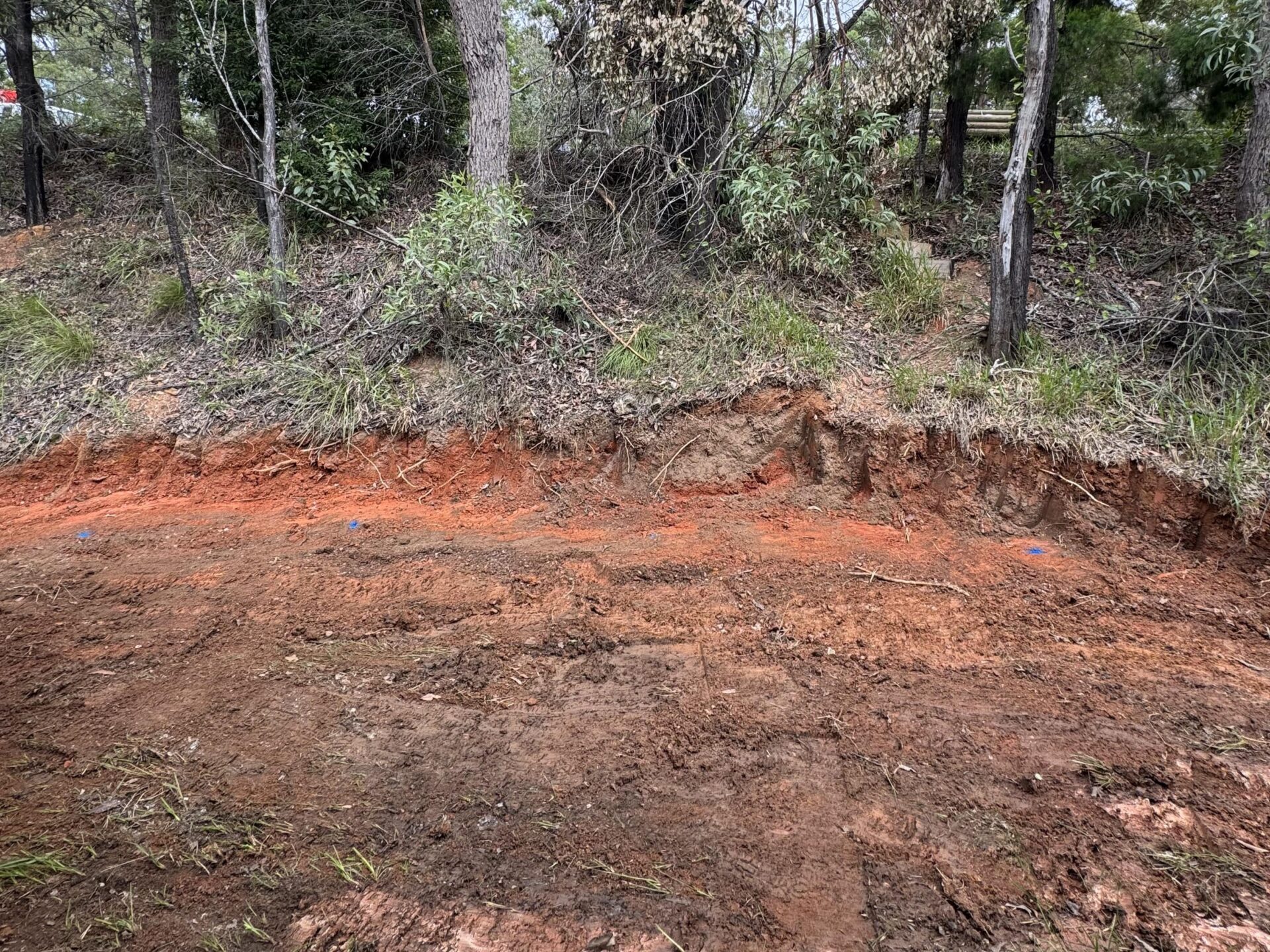
Location
Things you should check when considering a location for your retaining wall:
- Sunlight (which impacts how quickly the ground dries out)
- Water sources/runoff & existing garden features like trees (the area should have adequate terrain for water to run off from to avoid soil impaction – also known as hydrostatic pressure – behind the retaining wall
- Mapping the location & clearing land
Did you know? Hydrostatic pressure is one of the largest causes of a bowing/failing retaining wall.
How close can a retaining wall be to a house?
Throughout Australia, different local councils and state regulations will dictate how close your retaining wall can be built to a house or other building. It’s important you check your local council’s rules before planning your project.
Length
Usually, the location limits the length of the retaining wall. For example, along the length of a backyard fence. Measure along the length of your chosen area and note that down.
If your retaining wall length is not limited to the location, then you can choose a preferred length with no restrictions.
Height
In Queensland, you’re required to seek council approval for retaining walls over 1m tall. Usually, this means an engineer will need to inspect the location and draw up plans that will need to be followed by a qualified builder.
So, if you’re building a DIY retaining wall in Queensland just make sure to keep it under 1m tall. As for other Australian states, we recommend checking with your local council for advice and regulations.
Step 2: Selecting the right materials
Step 1: Choosing location, length & height
- SuperSleeper Composite Sleepers
- SuperSleeper Composite Posts
- SuperSleeper Composite Sleeper Supports
- SuperSleeper Composite Retaining Wall Wedges
- SuperSleeper Composite Retaining Wall Drainage (or another drainage system)
Optional
- SuperSleeper Composite Sleeper Caps (provides a flat cap to the retaining wall for aesthetic purposes)
If attaching a fence above the retaining wall:
What length of composite SuperSleeper to choose
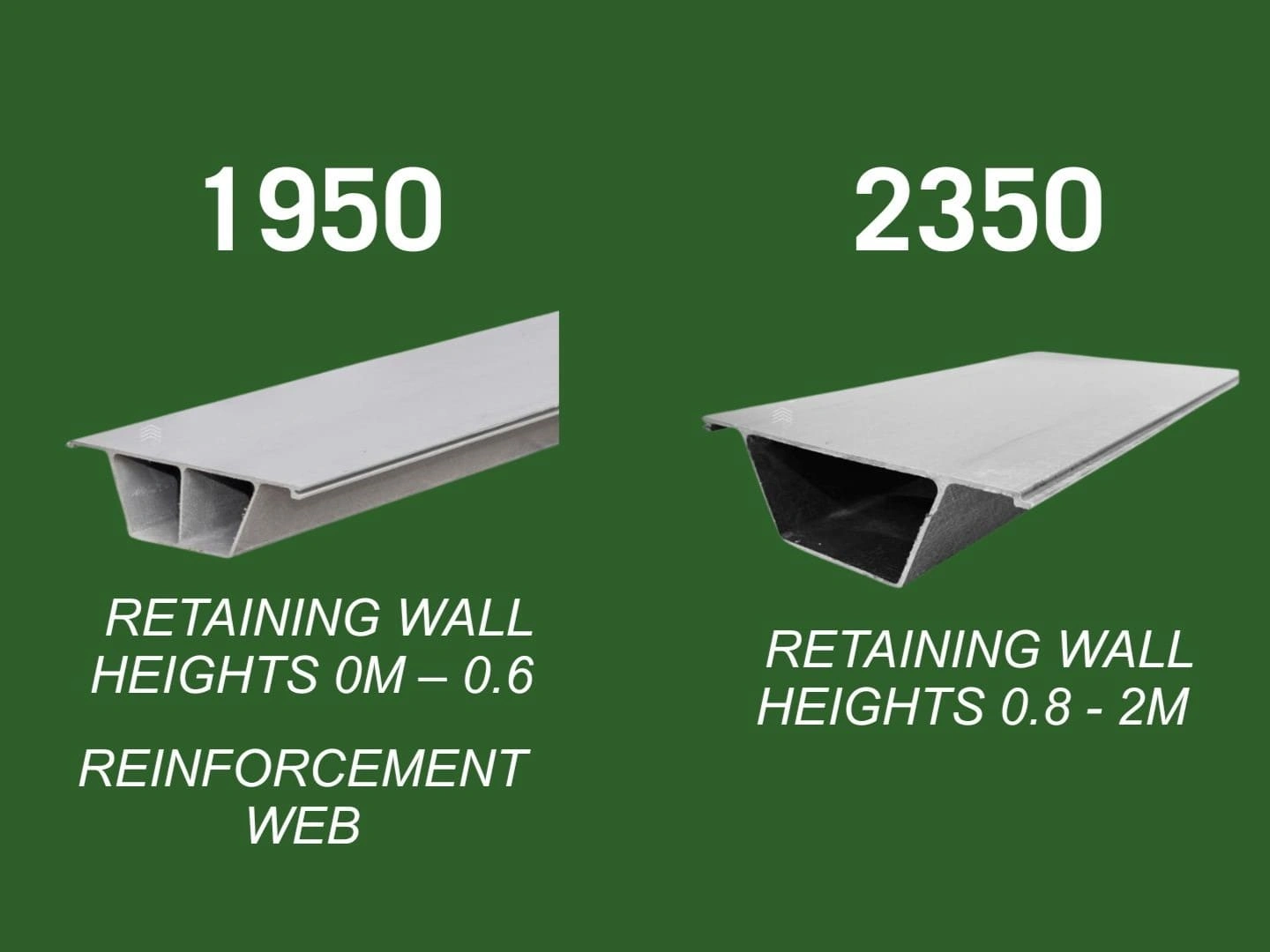
There are 2 lengths of SuperSleeper composite sleepers to choose from; 1950mm and 2350mm.
Retaining wall heights 0m – 0.6
For composite retaining walls up to 0.6m tall you can choose any sleeper length. Most people will use the shorter 1950mm sleeper due to aesthetics.
Retaining wall heights 0.8 – 2m
If your retaining wall is between 0.8m and 2m we recommend the smaller 1950mm size. This is because with shorter sleeper bays there’s more posts along the run to act as structural supports. The 1950mm sleeper has a built-in web support through the middle for extra strength.
Note: Remember to check with your local council for height restrictions in your area.
Step 3: Mapping the location & clearing land
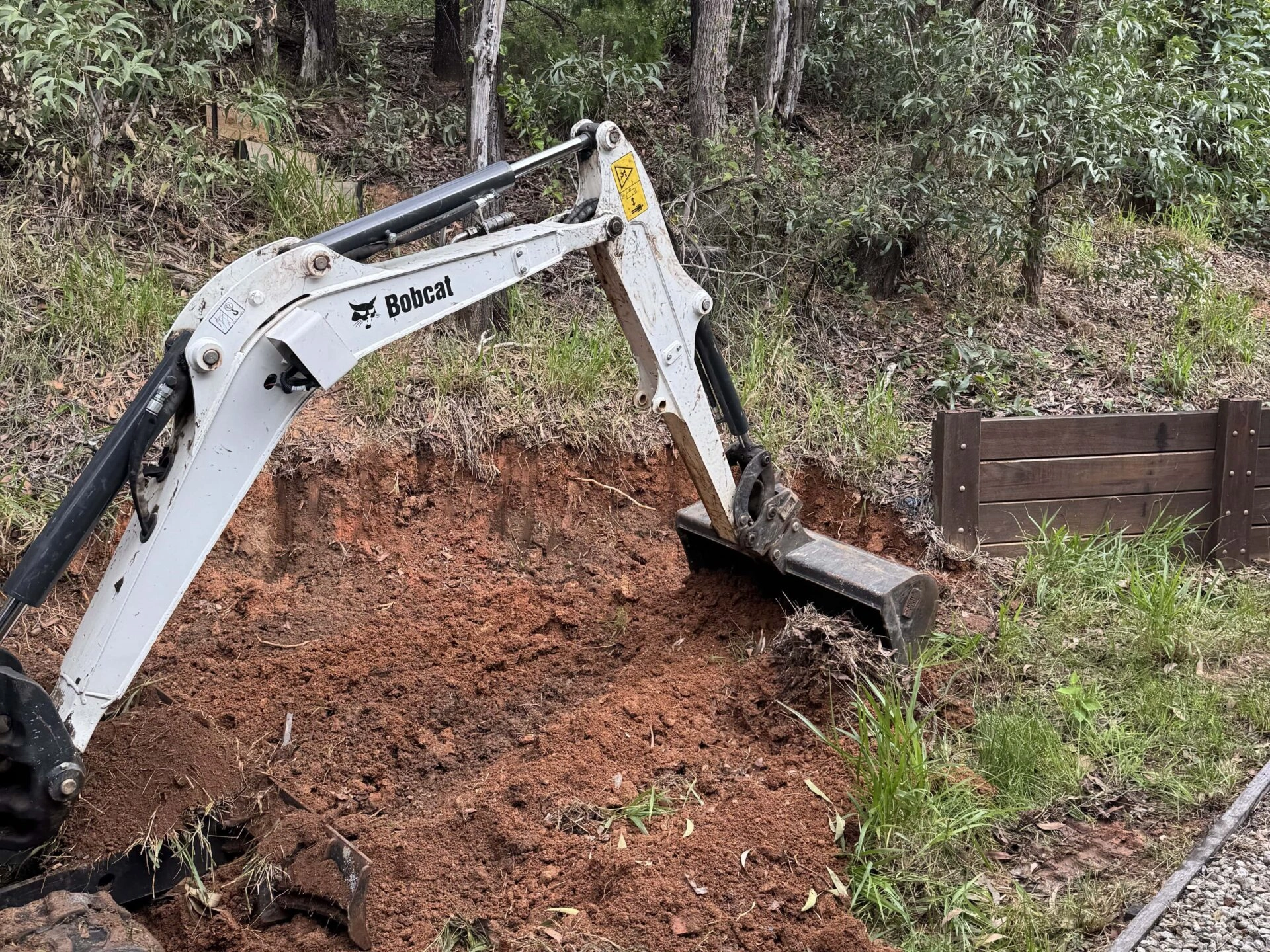
Prepping the Land
The first thing you’ll need to do is clear the land. You need a flat surface free of vegetation to work on. Depending on the soil and existing vegetation, you may need an excavator.
When excavating for a retaining wall, you should leave enough room behind where the wall will be to add drainage systems (50-100mm for SuperSleeper drainage mat and 30mm for geofabric drainage blanket) – and allow enough space for you to work easily.
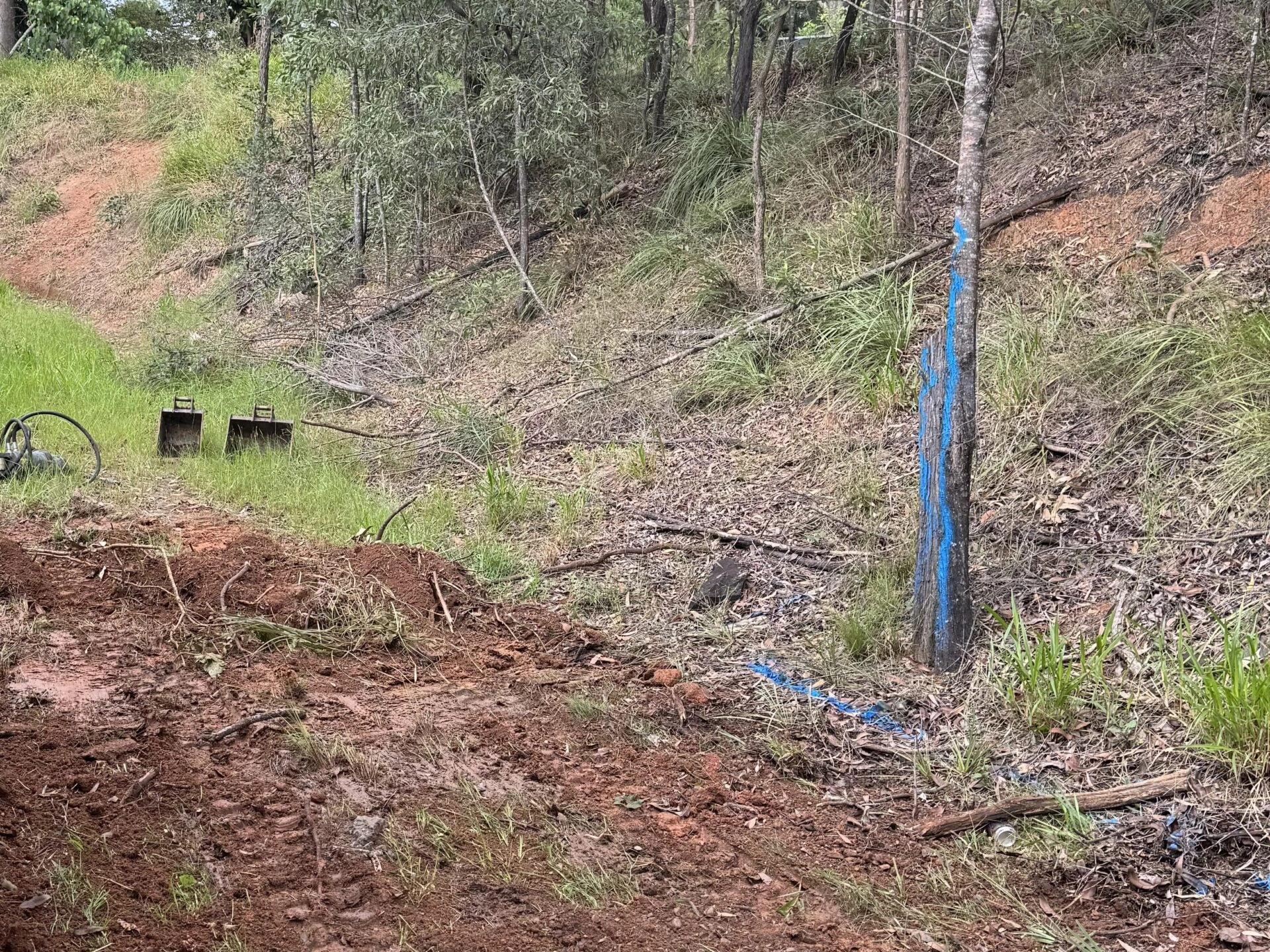
Mapping & Marking the Area
If the space around your retaining wall has trees or large vegetation, we recommend marking these with some brightly coloured spray paint for visibility when building.
Place string line along the length of the location of the retaining wall. String line will help you keep the retaining wall straight and give a visual reminder of where you’ll be working.
Marking the Post Hole Locations
Using a tape measure and spray paint, mark where your joiner posts (SuperSleeper Composite Posts) will be – this is where you’ll be digging the post holes in the next step. To do this, mark intervals along the run of the retaining wall – every 1950mm or 2350mm (whichever length composite sleeper you chose) – with a 10mm gap between each sleeper. The 10mm gap will account for the thickness of each SuperSleeper post.


